

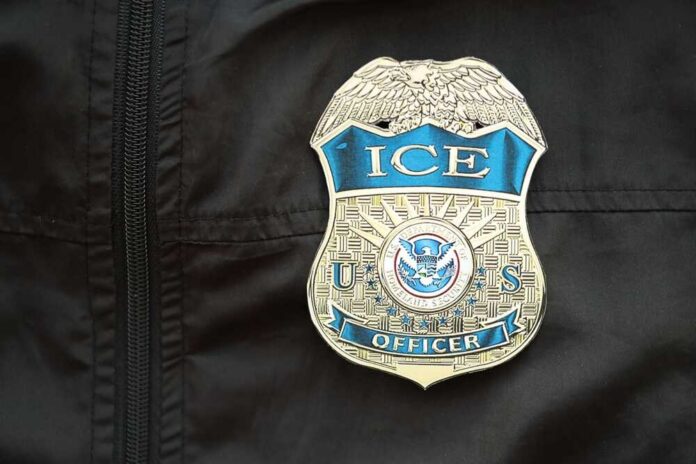
Federal immigration agents are quietly turning airport check-in lines into arrest zones for visa overstays, and the rules of the game just changed.
Story Snapshot
- Federal authorities now use U.S. airports as planned arrest sites for visa overstays.
- Transportation Security data helps flag travelers for Immigration and Customs Enforcement at checkpoints.
- Visa overstays have always been deportable, but the venue and visibility of enforcement are new.
- Domestic air travel is becoming a high-risk move for noncitizens with any status questions.
Airports Become The Front Line Of Overstay Enforcement
Federal immigration authorities are not waiting at homes or workplaces anymore; they are meeting people at the airport. An internal immigration memo described a “new tactic” of arresting people who overstay visas in airports, and at least 27 arrests have already taken place across nine states using this method.
Immigration lawyers report clients being detained at check-in counters and boarding gates while traveling between U.S. cities, not crossing borders. The airport, once a routine travel stop, is now a deliberate enforcement venue.
In an effort to ramp up deportations, federal immigration authorities have a new tactic: arresting people who overstay their visas in airports, according to an immigration memo obtained by ABC News.https://t.co/PiYfUEUkrq
— ABC News (@ABC) July 29, 2026
This change builds on a long-standing legal rule: overstaying a nonimmigrant admission makes a person removable under federal immigration law.
Department of Homeland Security guidance defines an “overstay” as someone who entered lawfully but stayed beyond the authorized period, and confirms that Immigration and Customs Enforcement is the lead agency for finding, arresting, and removing those overstays inside the country.
What is new is not the power to arrest overstays, but the decision to deploy that power in the most visible, stressful place a traveler can imagine.
How The Federal System Finds Visa Overstays
Federal systems make these arrests possible long before anyone reaches the airport. Customs and Border Protection maintains entry and exit records and uses a system called the Arrival and Departure Information System to flag suspected overstays when there is no recorded departure by the end of the authorized stay.
Those potential overstays move into targeting systems that sort leads by risk level and send high-priority cases to Immigration and Customs Enforcement officers for investigation and field enforcement. Behind every arrest at the gate sits years of federal data building a profile.
Official strategy documents spell out the next steps once an overstay lead is confirmed. The Department of Homeland Security’s comprehensive overstay strategy authorizes agents to locate suspected overstays, verify their status, assess any national security or public safety concerns, and then execute administrative or criminal arrests.
Congressional testimony shows how intense this work already is: one senior official told lawmakers that agents logged about 10,000 leads and made 1,910 arrests in a single year, spending roughly 650,000 hours on overstay enforcement. Large numbers of overstays exist, but only a fraction ever face arrest; airports are now where more of that fraction is showing up.
Why Airports Are Now Target-Rich Environments
Airports offer something federal agents value: a steady stream of people who must show identification and travel documents. A New York Times report, cited by other outlets, describes a growing partnership between the Transportation Security Administration and Immigration and Customs Enforcement that began by flagging people with deportation orders and now includes some visa overstays.
At security lines and check-in counters, Transportation Security officers gather names that can be checked against immigration databases in real time. Once a match hits, the airport becomes a controlled staging ground for an arrest.
That method fits perfectly with the internal memo described to ABC News, where sources explained that agents are targeting people at check-in counters and gates instead of doing time-consuming home visits or traditional surveillance work.
This approach is common sense: taxpayers are already funding data systems and airport security, so using both together to enforce the law is efficient.
Critics argue it feels like a trap for people with pending applications, but the basic idea—use checkpoints to catch known violators—matches how we treat other serious rules in society.
The Legal Line Between Technical Violator And Targeted Arrest
American immigration law draws a hard, bright line around visa time limits. Congressional research explains that anyone who stays past the authorized period is subject to removal and often faces future bars on admission.
One House Judiciary Committee hearing went even further, noting that technically a person is removable as an overstay even if they filed an extension on time and are only one day past their original deadline. That sounds harsh, but it reflects a basic idea: clear rules matter, and deadlines are real.
🚨🚨BREAKING NEWS 🚨
🇺🇸 DHS Targeting Visa Overstays Foreigners aat U.S. Airports to Expand Federal Deportation Pool
The Department of Homeland Security has initiated targeted enforcement operations inside major U.S. airports, apprehending foreign nationals with expired… pic.twitter.com/UT4b6fNKeM
— Corefrontline (@corefrontline) July 29, 2026
On paper, then, most airport arrests sit on firm legal ground. Federal watchdogs have long warned that overstay tracking is a key part of homeland security, and that the Department of Homeland Security holds primary responsibility to identify and take enforcement action against overstays.
At the same time, government auditors admit agencies act against only a small portion of the estimated overstay population, which means many people assumed they would never be targeted. The shock today comes from that assumption colliding with focused enforcement at the very place people feel most exposed.
What This Shift Means For Travelers And Policy
Immigrant advocates now tell clients to think twice before flying if they have any status question or past lapse; travel has become an enforcement trigger, not just a convenience.
For citizens who care about border security and respect for the law, this may sound overdue: why should someone who broke visa rules move freely through airports while law-abiding travelers wait in line and follow every step? From that view, President Trump’s team is simply using existing tools to restore basic order and fairness.
Yet the venue choice carries real human and political consequences. Being pulled from a boarding line in front of family, coworkers, or strangers turns a technical immigration problem into a public spectacle. Viral videos push these moments into national debate, and some cases involve people with pending paperwork who believed they were playing by the rules.
The lesson is blunt: in the modern immigration system, the airport is no longer just where trips begin. For overstays, it may be where their time in the United States ends.
Sources:
nytimes.com, dhs.gov, congress.gov, cbsnews.com, jeelani-law.com, abcnews.com, kqed.org, fakti.bg, gao.gov