
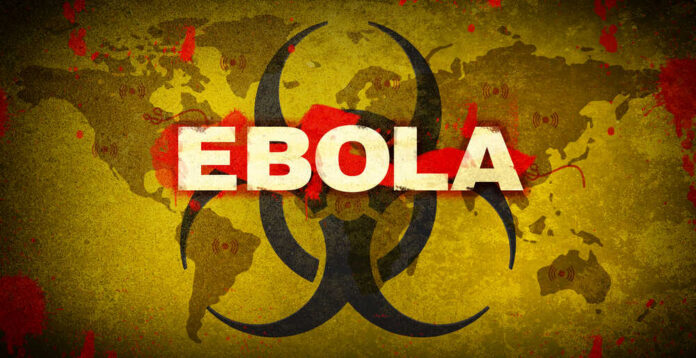
Congo’s Ebola outbreak has now infected more than 10,000 people, making it the deadliest Ebola crisis in the country’s history.
At a Glance
- Congo’s Ministry of Health confirmed 10,060 Ebola cases, with nearly half of those patients dead.
- The outbreak stems from the rare Bundibugyo strain of Ebola, for which no approved vaccine or treatment exists.
- Health officials describe it as the fastest-growing Ebola outbreak ever recorded in Congo.
- The disease has now spread into an eighth province, and nearby countries are tightening border checks.
Outbreak Crosses A Grim Threshold
Government data released this week showed Congo’s Ebola outbreak topped 10,000 confirmed cases, reaching 10,060 total infections. Nearly half of those patients have died, according to the Ministry of Health figures reported by NBC News. That death toll makes this the deadliest Ebola outbreak Congo has ever faced, surpassing past crises that shaped how the world responds to the virus.
Congo Ebola Outbreak Surpasses 10,000 Cases, 4,887 Deaths Amid Fears Of Wider Spread Across Africa | Sahara Reporters https://t.co/DLnz1t7ua0 pic.twitter.com/pKB9Zw8LOQ
— Sahara Reporters (@SaharaReporters) October 27, 2026
Just weeks earlier, the case count stood near 9,400, with more than 4,500 deaths already recorded. The speed of that climb, thousands of new cases in a short stretch, is why health workers call this the fastest-spreading Ebola event on record in the country. Every new report brings the outbreak closer to numbers nobody wanted to see repeated.
A Virus With No Approved Cure
This outbreak is driven by the Bundibugyo strain of Ebola, a rarer version of the virus than the one behind most past African outbreaks. No vaccine or treatment has been approved specifically for this strain, which leaves doctors relying on supportive care, fluids, oxygen, and treating symptoms as they appear, rather than a direct cure. That gap is a major reason the death rate has climbed so high so fast.
Without an approved shot to stop transmission early, containment depends almost entirely on old-fashioned public health work. That means tracing every contact an infected person had, isolating the sick quickly, and convincing frightened communities to cooperate with health teams. In a country with weak roads, spotty communication, and deep rural pockets, that work is slow and dangerous.
Spread Across Provinces Raises Alarm
The outbreak has now reached an eighth province in Congo, a sign that containment efforts are struggling to keep pace with the virus. Each new province means new treatment centers, new contact-tracing teams, and new risk that the disease jumps across a border. Neighboring countries are watching closely, since Ebola does not respect a map line once people start traveling.
Reports of Ebola patients turning up outside Congo have already pushed some governments to act. Travel screening and quarantine orders for people arriving from outbreak zones have gone into effect in parts of the region, a precaution any country, including the United States, would reasonably take when a deadly, hard-to-treat virus starts crossing borders.
How Health Officials Count Cases
Ebola surveillance systems split cases into categories: suspected, probable, and confirmed. A confirmed case requires a lab test. A probable case can be based on symptoms and known contact with an infected person when testing isn’t available. That distinction matters, because a “confirmed case” count is a stricter, more verified number than a broader case total, and it explains why health officials lean on lab-confirmed figures when announcing a milestone like this one.
That counting system exists for a reason. Outbreaks move fast, and getting the numbers right determines where resources go, which villages get a treatment center, and which contacts get traced first. Congo’s government leaning on confirmed lab data, rather than rough estimates, is the kind of disciplined reporting that gives health workers on the ground something solid to act on.
🇨🇩 Ebola outbreak in Africa tops 10,000 confirmed cases, with nearly 5,000 deaths, mostly in the Democratic Republic of Congo, health authorities say. pic.twitter.com/A4JkCxbye7
— Political Pen (@politicalpen_) October 27, 2026
Congo’s health workers, often with international support, are racing to vaccinate contacts, isolate the sick, and educate communities before the virus reaches more crowded cities. The stakes go beyond Congo’s borders. A virus this lethal, spreading this fast, with no approved cure, is exactly the kind of threat that demands serious border vigilance and fast international cooperation, not slow bureaucracy, while the outbreak is still contained to a handful of African nations.
Sources:
nbcnews.com, guelph.ctvnews.ca