
A Spanish high-speed train slammed into a stopped train near Toledo, killing 69 people, including four Americans and one Canadian.
Story Snapshot
- A Renfe high-speed train struck a stationary Iryo train near Urda, Toledo, south of Madrid.
- The death toll reached 69, with four Americans and one Canadian among the victims.
- A signaling computer failure halted six trains before the Renfe train was allowed to move again.
- Prime Minister Pedro Sánchez declared three days of national mourning for the victims.
What Happened Near Urda On That October Morning
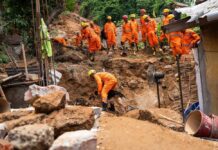
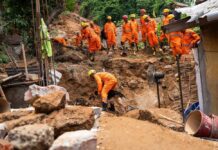
A Renfe AVE high-speed train crashed into the back of a stopped Iryo train near the small town of Urda in Toledo province. The impact was violent enough that two train cars fell down an embankment beside the tracks. Rescue crews worked through the wreckage for hours, and the scale of the loss quickly overwhelmed local morgue capacity, forcing officials to set up a temporary facility nearby.
The death toll climbed to 69, a number confirmed by Spain’s transport ministry and regional authorities. Among the dead were four American citizens and one Canadian national, a detail that turned a domestic tragedy into an international story overnight. Spanish officials also reported more than 100 people injured, though injury counts shifted across different reports in the days that followed.
A Signal Failure Set The Collision In Motion
Spain’s transport minister, Óscar Puente, said a computer failure inside the signaling system struck around 8:30 in the morning. That failure automatically halted six trains on the line, a built-in safety response meant to prevent exactly this kind of collision. Somewhere in the chain of decisions that followed, the Renfe train was authorized to move again while another train remained stopped ahead of it on the same track.
Preliminary findings suggest the Renfe train was traveling between 160 and 200 kilometers per hour, roughly 100 to 125 miles per hour, at the moment of impact. That speed, combined with the length of a loaded passenger train, explains why the collision proved so catastrophic. Investigators have described the control center’s decision to restart traffic as an early finding, not a final conclusion, and Catalan officials have been careful to say the full cause has not yet been established.
Political Fallout And Calls For Accountability
Minister Puente faced immediate calls to resign over the disaster, but he refused, defending his ministry’s handling of the aftermath even as scrutiny mounted. Political parties split over how much blame belonged with the controller who authorized the restart versus the aging signaling infrastructure itself. Prime Minister Sánchez announced three days of national mourning as the government tried to steady a shaken country.
This is Spain’s deadliest high-speed rail accident on record, and it has reopened a long-running debate about underinvestment in rail safety and maintenance across one of Europe’s largest high-speed networks. Critics point to years of budget tightening even as ridership grew. Supporters of the current system argue that automated safeguards worked as designed right up until a human decision overrode them, which is itself a finding worth taking seriously rather than dismissing as mere bad luck.
Why Blaming One Person Rarely Tells The Whole Story
Rail safety researchers who study crashes like this one consistently warn against pinning disasters entirely on a single controller’s judgment call. Broader patterns in accident investigations show that managerial oversight, equipment reliability, and maintenance gaps tend to matter as much as any individual’s split-second decision. The Toledo collision fits that mold: a technology failure came first, and a human choice came second, inside a system already under strain.
That distinction matters for how Spain responds. If investigators conclude the signaling failure created conditions that made an error more likely, then fixing training alone won’t prevent the next crash. Common sense says a country running one of the world’s busiest high-speed networks owes its riders a system that doesn’t put a single dispatcher’s split-second call between safety and catastrophe. The investigation into exactly what broke, and why, continues.
Families in the United States and Canada are now left grieving loved ones lost thousands of miles from home on a routine train ride. Spain, meanwhile, faces hard questions about whether its celebrated high-speed rail system has been quietly running on borrowed time.
Sources:
nbcnews.com, vaticannews.va, bbc.com, catalannews.com, rte.ie, apnews.com