

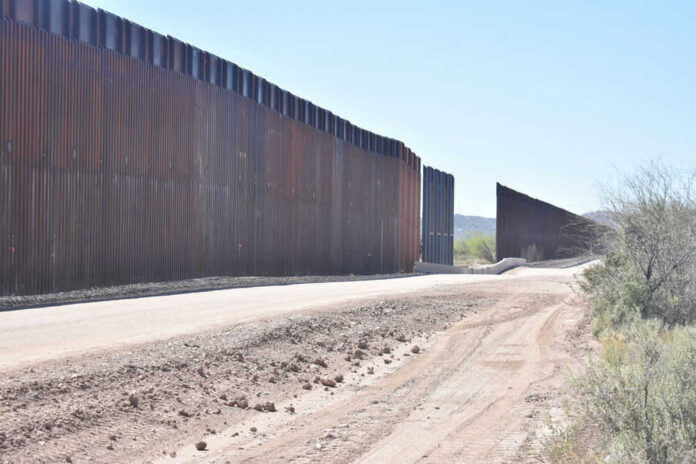
A single court order froze bulldozers at Big Bend and forced Washington to prove why this stretch of desert needs a wall at all.
Story Snapshot
- A federal judge paused border-barrier work across the Big Bend sector pending further review.
- Homeland Security used waiver powers to skip dozens of environmental and cultural laws.
- Customs and Border Protection said it has legal authority and a security plan for the region.
- Opponents say Big Bend is low-crossing terrain and the waivers do not fit the law.
What the court did and why it matters now
A federal court temporarily blocked border-barrier construction across the Big Bend sector of West Texas. The injunction stops ground work while the case proceeds on claims that the Department of Homeland Security misused its waiver powers. The suit, led by the Center for Biological Diversity and local partners, argues the agency cannot erase environmental and cultural safeguards to rush a wall through sensitive land. The order does not end the project, but it halts action until the government shows its legal footing.
The Department of Homeland Security had issued waivers to fast-track barriers, roads, and related infrastructure from Big Bend toward Lake Amistad. The waivers set aside multiple laws tied to environmental review, historic preservation, and public health. They took effect in late July and cleared red tape for construction access, staging, and security systems. This is a familiar playbook under the statute Congress passed, but it always draws hard questions when the land holds national treasures and tribal history.
What the government says it needs to build
Customs and Border Protection described a broader security package, not a lone line of steel. Plans referenced physical barriers, vehicle barriers, new roads, drainage, lighting, cameras, and sensors across parts of the sector. The agency stated it remains confident in its legal authorities and wants to secure the border while preserving Big Bend’s unique landscape. It also said some pieces were still in planning while it developed an execution plan linked to funded border projects, suggesting a phased, sector-wide approach.
The operational case rests on control of long, remote miles where response times can stretch. Agencies argue that roads and sensors let agents see and reach incursions, while selective barriers funnel traffic to checkpoints. That logic matches border doctrine used in higher-traffic sectors. The open question is whether the exact Big Bend footprints meet the law’s triggers and deliver enough security gain to justify the footprint here.
Why opponents say Big Bend is the wrong place
Plaintiffs point to sector data and terrain. Reports describe minimal migrant crossings across hundreds of miles, with local officials citing a small share of total encounters in this sector. Opponents say the waiver statute applies to areas of high illegal entry, which they argue Big Bend does not meet. They also warn that bulldozers, roads, and levee changes could harm wildlife, erode riverbanks, and even raise flood risks if engineering rules are skipped. Archaeologists and tribal advocates cite burials and sacred sites near proposed corridors.
Judge temporarily blocks Trump’s border wall in Big Bend region of Texas, citing likelihood of ‘irreparable harm’ and ‘public interest’ https://t.co/vXvYmD7L7Z
— Arnaud Mercier – #Entrepreneur #Versailles (@arnaudmercier) October 4, 2026
From a rule-of-law lens, the strongest challenge targets fit to the statute, not the existence of the waiver power itself. Courts have upheld broad waiver use before, but judges still test whether the agency tied the designation to clear, on-the-ground need. The administration would help itself by releasing incident maps, smuggling-route analysis, and response-time models for these exact miles. Conservative readers value border security, but they also expect clean statutory grounding and respect for property rights.
What comes next and what to watch
Expect a fight over facts. The court will weigh whether the record supports using waivers here and whether the planned mix of barriers, roads, and technology matches a real operational gap. Watch for government submissions that quantify incursions and show why alternatives, like mobile surveillance towers and river-based patrols, were not enough. Also watch for map shifts. Prior reporting already shows scope adjustments that lean more on detection tech, which could narrow the dispute while preserving security aims.
The durable path likely blends targeted barriers at known crossings, all-weather roads to cut response times, and sensors that flag movement in real time. That mix can meet security goals while limiting heavy ground disturbance in the most sensitive zones. If the administration shows Big Bend miles where that formula stops smugglers and protects agents, it strengthens its hand. If not, the court’s pause could become a pivot to a technology-first plan that still defends the line.
Sources:
nbcnews.com, npr.org, time.com, apnews.com, texastribune.org, bigbendsentinel.com, thetexan.news, dallasexpress.com, pbs.org