
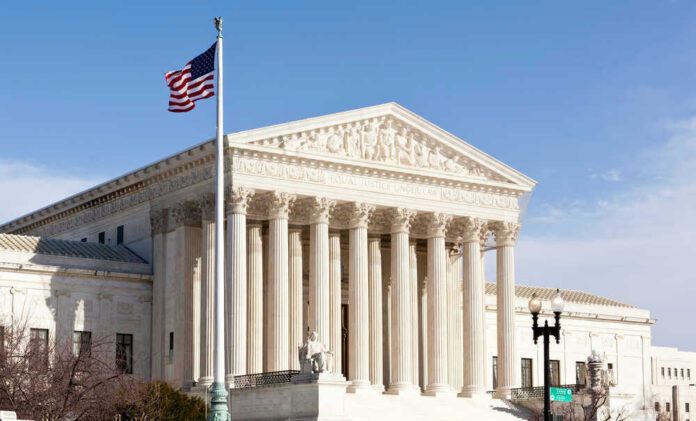
The Supreme Court unanimously sided with law enforcement over privacy advocates, ruling that police can enter homes without warrants during emergencies without meeting the typical probable cause standard—a decisive victory for officers nationwide facing split-second decisions in crisis situations.
Story Highlights
- Supreme Court unanimously upholds warrantless police entry during a suicide emergency in Montana
- Ruling clarifies officers need only an “objectively reasonable basis” rather than probable cause for emergency aid
- Decision resolves nationwide court splits and strengthens law enforcement flexibility in crisis response
- Montana Attorney General hails victory as enabling officers to “keep communities safe”
Supreme Court Delivers Unanimous Victory for Law Enforcement
On January 14, 2026, the Supreme Court issued a resounding unanimous decision in Case v. Montana, upholding police officers’ authority to enter homes without warrants during genuine emergencies.
Justice Elena Kagan authored the opinion affirming that officers need only an “objectively reasonable basis” to believe someone requires immediate help, rejecting demands for the higher probable cause standard typically required in criminal investigations.
The ruling directly supports frontline officers who must make rapid decisions when lives hang in the balance.
🚨BREAKING🚨
The Supreme Court just ruled 9-0 that a warrantless "welfare check," where police shot Trevor Case in his own home, was justified in Case v. Montana.
Apparently, police DO NOT need probable cause to break into gun owners' homes WITHOUT WARRANTS & shoot them. https://t.co/S2KHSx3Mos pic.twitter.com/hWrTWu7UqT— Gun Owners of America (@GunOwners) January 14, 2026
Montana Case Highlights Constitutional Balance in Emergency Response
The case originated in 2021 when Anaconda police responded to a 911 call from William Trevor Case’s ex-girlfriend, who reported he had threatened suicide and possibly shot himself. Officers arrived at Case’s home, observed potential blood evidence, received no response to knocks, and made the decision to enter.
Case emerged from a closet pointing a gun at an officer, who shot and wounded him in self-defense. Case was subsequently convicted of assaulting a peace officer but challenged the warrantless entry on Fourth Amendment grounds.
Case’s legal team argued that police should have obtained a warrant or at minimum established probable cause before entering his home. However, the Supreme Court firmly rejected this position, distinguishing emergency aid situations from criminal investigations.
The Court emphasized that requiring probable cause would create dangerous delays when officers are responding to potential suicide attempts or other life-threatening emergencies where immediate intervention could mean the difference between life and death.
Ruling Strengthens Police Authority While Clarifying Constitutional Standards
The decision resolves conflicting interpretations among lower courts regarding emergency entry standards, creating nationwide clarity for law enforcement agencies.
Montana Attorney General Austin Knudsen, who argued the case before the Supreme Court, celebrated the outcome as “a huge win for Montana law enforcement that allows officers to keep communities safe.”
Anaconda Police Chief Bill Sather similarly praised the ruling, noting it “makes it easier for officers to do their job” when responding to mental health crises.
An appropriate, unanimous decision. "Supreme Court sides with Montana police on warrant requirements during emergencies"https://t.co/lg294h8Jl9
— Rob Douglas (@RobDouglas3) January 14, 2026
The Court specifically rejected Montana’s broader “caretaker doctrine” reasoning while affirming the conviction, instead grounding the decision in the established Brigham City v. Stuart precedent from 2006.
This approach demonstrates the Court’s commitment to principled constitutional interpretation while ensuring officers retain necessary tools for emergency response.
The ruling distinguishes genuine emergencies from routine welfare checks, maintaining important Fourth Amendment protections against government overreach while recognizing legitimate public safety needs.
Sources:
Court finds police properly entered man’s home despite absence of a warrant
Supreme Court backs warrantless entry in emergencies
Supreme Court Opinion Case v. Montana (24-624)
Cornell Law Supreme Court Case v. Montana