
Hillary Clinton’s sworn claim that she “does not recall ever encountering” Jeffrey Epstein is now part of Congress’s official record—raising fresh questions about accountability for America’s most protected political class.
Quick Take
- Hillary Clinton told House investigators she had no knowledge of Epstein’s crimes and cannot recall ever meeting him.
- The closed-door deposition took place in February 2026 near the Clintons’ home in Chappaqua, New York.
- The testimony is tied to a broader House Oversight investigation into Epstein’s connections to prominent U.S. officials.
- Bill Clinton’s past flights on Epstein’s jet remain documented in public records and are central context for the inquiry.
What Hillary Clinton Said Under Oath
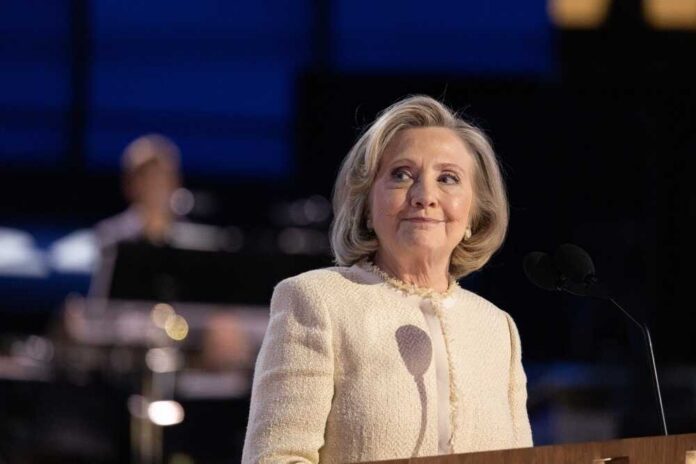
Hillary Clinton appeared for a closed-door deposition as part of the House Oversight Committee’s investigation into Jeffrey Epstein’s connections to prominent U.S. officials. In her opening statement, she said she had no knowledge of Epstein’s criminal activity and “does not recall ever encountering” him. She also stated she never flew on his plane and never visited his island home or offices, positioning her testimony as a categorical denial of direct contact.
Clinton also framed the committee’s decision to compel her testimony as political, arguing investigators knew she had no information that would advance the inquiry. That posture matters because it places two questions side by side: what she knew or didn’t know about Epstein, and what the committee is attempting to document through sworn statements. The deposition is complete, but the committee’s investigation continues beyond her appearance.
Why the Deposition Happened in Chappaqua, and Why Timing Matters
The depositions occurred in February 2026 at the Chappaqua Performing Arts Center in upstate New York, near the Clintons’ home, with media gathered outside. The scheduling followed months of negotiation between the committee and the Clintons. On February 2, 2026, Oversight Chairman James Comer initially declined an offer for them to testify, then later that day an agreement was reached—avoiding a potential contempt of Congress vote.
The committee’s leverage came from subpoena power, a constitutional tool Congress uses to compel testimony during oversight. For conservative voters who watched years of uneven accountability—especially during the era of administrative overreach and selective enforcement debates—the basic principle here is straightforward: sworn testimony and a traceable record matter. The location and timeline underscore that this was not a casual media appearance; it was formal fact-gathering under congressional authority.
🚨 BREAKING: Hillary Clinton tells House investigators in prepared deposition testimony that 'I do not recall ever encountering' Jeffrey Epstein pic.twitter.com/45CwQvEIjC
— Fox News (@FoxNews) February 26, 2026
Bill Clinton’s Documented Links Set the Backdrop
Hillary Clinton’s denial exists alongside a separate, heavily documented history involving Bill Clinton. Public reporting and compiled records describe Epstein’s visits to the White House during the Clinton presidency and Bill Clinton’s travel on Epstein’s private jet in the early 2000s. One widely cited example is a 2002 trip to Africa that included high-profile companions and was later described by a Clinton spokesman as multiple separate trips with staff and Secret Service involvement.
After Epstein’s 2008 conviction in Florida and his 2019 federal arrest, scrutiny intensified around anyone connected to him. Bill Clinton’s office publicly stated in 2019 that Clinton knew nothing about Epstein’s crimes and had not visited Epstein’s island, New Mexico ranch, or Palm Beach residence. Court-unsealed flight logs released in 2019 further corroborated Bill Clinton as a passenger on multiple flights between 2001 and 2003, cementing why Congress is still asking questions.
What’s Known, What’s Unclear, and Why Oversight Continues
The current record, based on the provided research, supports two parallel facts: Hillary Clinton has now offered sworn denials of any personal encounter with Epstein, while Bill Clinton’s interactions are supported by flight logs and other documentation. The research also notes a January 2026 revelation that the FBI previously investigated allegations connected to Clinton and Epstein, but it does not provide details about scope or findings, limiting what can be responsibly concluded.
The research also cites an August 2025 statement attributed to Ghislaine Maxwell saying Epstein was connected to Clinton only through her and denying Clinton visited Epstein’s island. Because Maxwell is a convicted Epstein associate, her statements may be viewed skeptically, but the existence of the claim is part of the broader narrative Congress is trying to map. With limited additional documentation provided here, the strongest takeaway is procedural: Congress is building a sworn timeline, witness by witness.
Hillary Clinton tells House 'I do not recall ever encountering' Jeffrey Epstein
-FoxNewsNow Clinton is trying to turn the attention back on Trump. 😆 🤣 https://t.co/DMG0GxUS3O
— MonteJr83 (@_America_Proud_) February 26, 2026
For a public exhausted by elite impunity and constant media double standards, the significance is not a viral soundbite—it’s the creation of an official record. If contradictions emerge between sworn testimony and documentary evidence, that is where accountability can begin. If no contradictions emerge, the public still gets transparency about who did what, when, and what they claim they knew. Either way, oversight is the tool that separates speculation from evidence.
Sources:
https://www.businessinsider.com/hillary-clinton-bill-clinton-relationship-timeline
https://en.wikipedia.org/wiki/Relationship_of_Bill_Clinton_and_Jeffrey_Epstein