

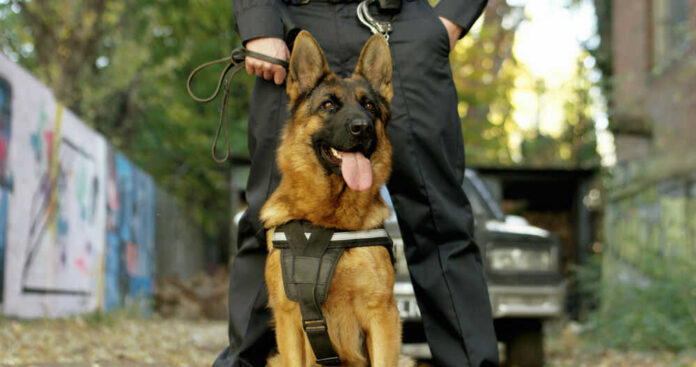
A police K-9 named Trina found a missing 70-year-old hiker alive on a remote trail as daylight faded.
Story Snapshot
- Police K-9 Trina located the man about two miles from his rental car on October 19, 2026.
- Officer Christopher Ross handled Trina, who described the man as slightly off the trail in the bushes.
- Rescuers carried him out and took him to a hospital for dehydration and exposure.
- Multiple outlets reported the same core outcome and timeline details.
A fast-moving search ends with a name, a dog, and a clock
Hawaiʻi Island police deployed K-9 Trina and her handler, Officer Christopher Ross, after a 70-year-old visitor vanished inside Hawaiʻi Volcanoes National Park. Crews searched trails and brush while a helicopter scanned from above. Trina found the man at about 7:30 p.m., roughly two miles from his rental vehicle, on a trail as the light dropped fast. Ground teams moved to the location, stabilized him, and began the carry-out. The find shifted the effort from search to rescue in minutes.
Officer Ross later described the spot where they found him. He said the man lay on his back, slightly off the trail, hidden by bushes. Thick vegetation and fading light made visual detection tough for humans alone. That detail matches why agencies still invest in scent-trailing dogs. When brush blocks eyes, and the wind swirls scent, a trained dog can cut search time and distance. Ross’ on-scene account helps explain how Trina cracked the case.
What we know about the outcome and the operation
The Hawaiʻi Police Department said crews carried the man to a trailhead and transported him for treatment of dehydration and exposure. That outcome fits a day and night outdoors at elevation and in variable weather. Big Island Video News, Hawaii News Now, and Fox News all match core facts. They report Trina’s role, the two-mile distance from the car, and the later medical transport. That cross-reporting gives the rescue a consistent backbone.
Search-and-rescue rarely belongs to a single hero. National park incidents often involve park rangers, local police, county fire, air assets, and volunteers. Dogs are a force multiplier, not magic. They cover more ground and can cut through human error. But they also work best inside a team that sets search areas, controls traffic, and manages safety. This rescue shows that system in action: coordinated ground teams, an air search, and a police K-9 closing the loop.
Why the dog mattered when minutes did
Peer-reviewed research backs the value of trained search dogs. In a controlled study of wilderness searches, dog teams located targets in about three out of four trials. Overall effectiveness, which accounts for errors, was lower but still strong. Dogs also traveled more than twice the distance of handlers during tasks. These numbers explain the real edge. A well-trained dog extends human reach when fatigue, brush, or darkness raise the odds of a miss.
That science meets common sense. A dog’s nose reads what eyes miss. On a narrow trail at dusk, a lost hiker a few yards off the path can vanish to sight but not to scent. The operational point is simple. Use tools that work and train them hard. That mindset aligns with conservative values: results over theater, readiness over slogans, and gratitude for skilled public servants who deliver when it counts.
Lessons for hikers and families
National parks run thousands of rescues each decade, and many involve older visitors. Water, layers, a charged phone, a simple whistle, and telling someone your plan can change outcomes. Families should set a turnaround time and stick to it. Rangers and police can find you faster when you leave clear breadcrumbs, even tiny ones like a photo at the trailhead sign. Better inputs make faster rescues and lower risk for responders.
The Hawaiʻi Island case ended the right way. A named K-9 team did its job. A wider crew made it possible. A 70-year-old made it home. Coverage may spotlight the dog, as it should. Still, the enduring lesson is the system. Build capacity. Keep standards high. Practice often. And when the call comes late and the light fades, send the team that can find a man hidden in the brush, two miles from a car, before the night wins.
Sources:
people.com, bigislandvideonews.com, hawaiinewsnow.com, ground.news, us.headtopics.com