

U.S. forces just seized a massive Venezuelan oil tanker tied to terror-linked smuggling, signaling that Trump’s second term is putting America’s security and energy interests ahead of socialist dictators and their enablers.
Story Snapshot
- U.S. Coast Guard, backed by the Navy, seized a sanctioned supertanker off Venezuela under American law enforcement authority.
- The ship, tied to an illicit oil network benefiting Iran’s Revolutionary Guard and Hezbollah, carried about 2 million barrels of crude.
- Venezuela’s Maduro regime is calling the move “piracy,” while Democrats in Congress question Trump’s pressure campaign.
- The seizure fits Trump’s broader effort to choke off revenue to hostile regimes and restore America’s leverage in the Western Hemisphere.
Trump’s High-Stakes Move Against a Terror-Linked Tanker
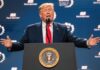
President Donald Trump announced that the United States has seized a large oil tanker off the coast of Venezuela, describing it as the largest vessel ever taken in such an operation and insisting it was seized “for a very good reason.”
The action comes amid heightened tensions with Nicolás Maduro’s socialist regime and follows months of U.S. military buildup and maritime interdictions targeting drug-smuggling and sanctioned oil shipments in the Caribbean and eastern Pacific.
According to U.S. officials, the seizure was executed by the U.S. Coast Guard with Navy support, operating under American law enforcement authority rather than a purely military mission.
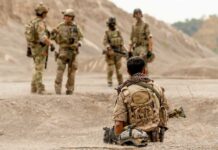
Coast Guard personnel reportedly fast-roped from helicopters launched off the aircraft carrier USS Gerald R. Ford, which has been deployed to the Caribbean in a clear show of force. Video shared online shows armed Coast Guard members sweeping the ship’s superstructure, underscoring the seriousness and professionalism of the operation.
Trump says the U.S. has seized an oil tanker off the coast of Venezuelahttps://t.co/96t8IUbPLw pic.twitter.com/jild6ABAgr
— The Washington Times (@WashTimes) December 11, 2025
The Skipper’s Shadowy Past and Terror Finance Network
Officials identified the seized vessel as the Skipper, a tanker that departed Venezuela around December 2 with roughly 2 million barrels of heavy crude on board, including a substantial portion reportedly owned by a Cuban state-run oil importer.
Ship-tracking data revealed the vessel was previously known as the M/T Adisa, which the United States sanctioned in 2022 for its role in a sophisticated “shadow tanker” network moving oil for Iran’s Revolutionary Guard and Hezbollah, both designated terror organizations.
That shadow network, cited by U.S. authorities, relied on ghost tankers that switch identities, obscure locations, and conduct mid-ocean transfers to hide the origin and destination of crude. Many of the shell companies behind these movements operate from secrecy jurisdictions, shielding real owners and financing channels.
For conservatives focused on national security, the fact that Venezuelan crude is intertwined with Iranian and Hezbollah-linked operations confirms long-standing warnings about a dangerous alliance between rogue regimes in the Western Hemisphere and radical Islamist terror sponsors.
Maduro Cries ‘Piracy’ While Blaming the U.S. for Venezuela’s Collapse
Venezuela’s socialist government blasted the tanker seizure as “blatant theft” and “international piracy,” insisting that U.S. actions expose a supposed plot to steal the country’s natural resources.
Maduro’s regime framed the operation as proof that Washington has always targeted Venezuela’s oil, claiming that its energy reserves belong solely to the Venezuelan people.
At the same time, Maduro told supporters his country is prepared to “break the teeth of the North American empire” if necessary, casting himself as a victim resisting foreign aggression.
Those statements omit the core reality that Venezuela holds the world’s largest proven oil reserves yet produces only about 1 million barrels per day after years of socialist mismanagement, corruption, and cronyism.
State-owned oil company PDVSA, once a pillar of prosperity, now leans on opaque intermediaries and sanctioned partners like Russia and Iran to skirt U.S. sanctions.
For many American conservatives, Maduro’s rhetoric about “piracy” rings hollow when his own government has destroyed the country’s economy while partnering with regimes and networks openly hostile to the United States.
Maximum Pressure, Regime Change Accusations, and Congressional Pushback
The tanker seizure fits into a broader Trump maximum-pressure campaign that began in his first term, when Washington warned that any company doing business with Maduro risked being cut off from the U.S. financial system.
That strategy forced Venezuela and its allies into murkier shipping arrangements, relying on ghost fleets and covert transfers. Now, with an aircraft carrier group in the region, the administration is clearly signaling that it will not tolerate terror-linked or sanctions-busting shipments moving freely off America’s near shores.
Democrats and some legal experts are already pushing back, seizing on this operation and earlier deadly strikes on alleged drug-smuggling boats to claim the administration’s real agenda is regime change by force.
Senator Chris Van Hollen argued that seizing a tanker undermines the stated focus on drug interdiction and proves the mission is about ousting Maduro.
Naval historian Vincent P. O’Hara called the seizure “very unusual” and “provocative,” warning it could deter maritime traffic and further damage Venezuela’s economy, which supporters of the operation see as leverage against a hostile regime.
Energy Security, Constitutional Questions, and What Comes Next
For many on the right, the Skipper case highlights how energy, security, and sovereignty intersect.
By targeting a ship tied to Iran’s Revolutionary Guard and Hezbollah, the Trump administration is cutting off funding streams that could underwrite terrorism, while also exerting pressure on a socialist dictatorship that has undermined regional stability for years.
Trump’s remark that “we keep it, I guess” about the oil will inflame critics, yet many conservatives will hear a familiar message: American interests and security come first, not the comfort of rogue regimes.
At the same time, the operation raises questions that constitutional conservatives will watch closely. Lawmakers are already demanding unedited video of prior boat strikes, and some legal scholars argue the strikes may have tested limits on the lawful use of deadly force.
As Trump signals that land operations against Maduro’s network may be coming, Congress, the courts, and the public will be weighing a key balance: how far the United States should go to confront hostile, terror-linked regimes without sliding into unchecked executive war-making power.