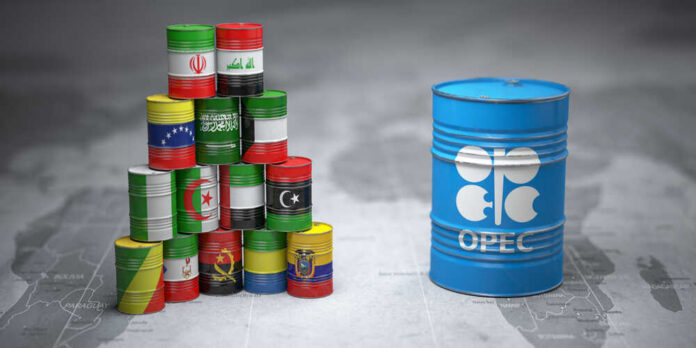
When a half-century member walks out of OPEC, the real story isn’t the exit—it’s who controls the spigot when the next shock hits.
Story Snapshot
- The UAE says it will leave both OPEC and OPEC+ effective May 1, 2026, ending more than five decades of membership.
- Officials frame the move as a sovereign decision aimed at output flexibility and long-term market fundamentals, not a price war.
- The timing lands in an anxious market shaped by Iran-war disruptions and ongoing worries about the Strait of Hormuz.
- Saudi Arabia remains the “engine” of OPEC spare capacity, but the UAE’s departure punctures cartel unity when unity matters most.
The UAE’s Exit Date Matters More Than the Announcement
The UAE picked a clean break: it announced the decision on April 28, 2026, and set the exit from both OPEC and OPEC+ for May 1, 2026. That short runway tells you this wasn’t a trial balloon.
It was a decision already stress-tested inside the country’s planning system, built around capacity, investment timelines, and political risk. For oil markets, calendar certainty beats rumor every time.
The UAE also avoided theatrical language. Energy Minister Suhail al-Mazrouei described a “careful look” at national strategy and called it a sovereign choice. That’s diplomatic code for: quotas no longer match the country’s priorities.
The UAE signaled it plans to add supply gradually and in line with demand, which reads like reassurance to traders and customers who fear a sudden surge that collapses prices.
Quotas Versus Capacity: The Hidden Friction Inside OPEC+
OPEC and OPEC+ work when members accept restraint in exchange for higher, steadier revenue. That bargain weakens when a country invests heavily to expand capacity but sees its output capped by group targets.
The UAE’s logic is straightforward: it wants flexibility to monetize current and future capacity as demand evolves. That view isn’t radical; it’s what any disciplined operator would do when constrained by someone else’s spreadsheet.
The United Arab Emirates said it was quitting OPEC and OPEC+, dealing a heavy blow to the oil exporting groups and their de facto leader, Saudi Arabia, at a time when the Iran war has caused a historic energy shock and unsettled the global economy https://t.co/WDnS1uI42H pic.twitter.com/7cNqPwihK3
— Reuters (@Reuters) April 28, 2026
The bigger issue is precedent. OPEC’s cohesion relies on the belief that membership is sticky, even when partners disagree. The UAE leaving after more than five decades tells every other producer that loyalty has a price—and the price can become too high.
For investors, this changes the risk model: group guidance becomes less binding when a major player proves the door isn’t locked.
Saudi Arabia Still Leads, But Unity Was Part of Its Power
Saudi Arabia holds the dominant spare capacity and can still move markets, but leadership in OPEC has always been about more than barrels. It’s also been about the ability to align others, to make a collective story credible.
The UAE’s exit lands as a political blow because it weakens that story at the moment supply disruptions already make coordination harder. A cartel looks strongest when it can project discipline under stress.
The research also highlights longstanding tensions between the UAE and Saudi Arabia over oil strategy and market approach.
That matters because disagreements inside a cartel don’t stay technical for long; they become about status, sovereignty, and who gets to define “responsible” production. The UAE’s move effectively answers that question for itself: responsibility now means serving national interest first, and coordinating only when it fits.
The Iran War and Hormuz Anxiety Turn Flexibility Into a Weapon
Oil isn’t priced only on what’s pumping today; it’s priced on what could be interrupted tomorrow. The Iran-war-driven disruptions and the shadow over the Strait of Hormuz raise the value of optionality—the ability to respond quickly if supply tightens.
The UAE is betting that flexibility will be worth more than cartel membership in a volatile region. That bet also appeals to consuming countries that want reliable partners more than coordinated scarcity.
From a common-sense standpoint, the UAE’s rationale is easy to translate: a nation should control its own productive capacity and respond to real market signals, not to political quota negotiations.
That doesn’t make the UAE a charity; it makes it rational. If extra supply moderates price spikes, families and businesses benefit. If it doesn’t, at least the world sees a producer choosing output over orchestration.
Why Washington Sees This as a Win—and Why That Can Be Overstated
Analysts characterize the exit as a win for President Donald Trump’s long-running critique that OPEC inflates prices at the expense of consumers. The logic is clean: fewer members cooperating means less coordinated price management.
That aligns with a pro-consumer, pro-growth preference for competitive supply. Still, common sense demands caution. One country leaving doesn’t erase OPEC’s influence, especially with Saudi capacity still central.
The more durable impact may be psychological. Markets trade on confidence in systems. If traders start believing OPEC+ discipline can unravel—member by member—then every meeting, every quota hint, and every “voluntary cut” carries less weight.
The UAE didn’t just change its own policy; it forced everyone to reprice the cartel’s credibility. That re-pricing can create volatility even before a single additional barrel ships.
What to Watch Next: Output Pace, Copycats, and the New Bargaining Table
The UAE says it will bring additional production to market gradually and in line with demand and conditions. That single word, gradually, is the tell.
The next chapter isn’t an immediate flood; it’s a measured test of how much freedom the UAE can exercise without provoking retaliation or destabilizing prices. The world now watches to see how quickly official capacity translates into sustained exports—and which customers lock in longer-term deals.
The second storyline is whether any other producer decides the benefits of independence now outweigh the benefits of membership. OPEC survives by making defection unattractive.
The UAE just proved defection is possible, and it chose a moment when the market’s need for reliable supply makes that choice easier to defend. The next shock—geopolitical or economic—will reveal whether OPEC’s old model still commands obedience.
Sources:
UAE announces decision to exit OPEC, OPEC+
UAE says it will leave OPEC effective May 1