
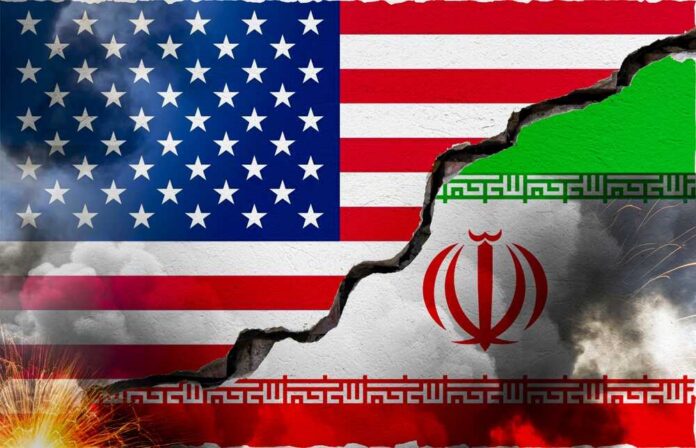
The United States hit three Iranian oil tankers after saying Navy warships came under ballistic-missile fire, signaling a sharper phase in a fight that now targets Iran’s pocketbook as much as its launch sites.
Story Snapshot
- U.S. forces struck three Iranian oil tankers tied to Iran’s wartime logistics, after missile fire at Navy ships.
- Central Command warned Iran’s small, exposed oil fleet could be destroyed if attacks continue.
- Washington paired kinetic strikes with tighter oil pressure and broader hits on Iranian military nodes.
- Tehran issued denials and counter-claims before; the clash fits a repeat pattern in the Strait of Hormuz.
What Triggered The Strikes And Why Tankers Matter
U.S. Central Command said American forces struck three Iranian oil tankers after Iranian ballistic missiles targeted U.S. Navy warships.
The command cast the action as both retaliation and a move against a funding lifeline, warning Iran’s limited and exposed tanker fleet faces risk if attacks continue.
Targeting tankers hits Iran where it hurts: cash flow and reach. The United States has also paired shots at sea with renewed pressure on Iran’s oil revenue channels, tightening the vise.
Hitting tankers is not random violence; it is leverage. Iran has long used proxy fire and maritime coercion to skirt sanctions. Strikes on ships that support that system raise the cost of those tactics. U.S. planners judge that damage to a few hulls can chill dozens of voyages.
Shipping firms, insurers, and captains do not rush into a zone where ballistic missiles and fighter jets trade shots. The effect compounds fast, even without a formal blockade.
The US said its forces struck three Iranian oil tankers after Iran's Revolutionary Guards launched ballistic missiles at two US Navy ships https://t.co/KS0YCd8KGF pic.twitter.com/ukh7v8bTT7
— Reuters (@Reuters) September 6, 2026
How This Fits A Known Strait Of Hormuz Script
The exchange follows a familiar cycle: strikes on ships, U.S. retaliation, then more claims and counter-claims as each side tries to seize the story.
Recent weeks saw waves of U.S. attacks on Iranian targets and curbs on oil trade, while Iran or allied forces hit or threatened commercial vessels near the choke point.
Traffic slowed, risk soared, and both sides tested limits without tipping into a declared war. The pattern rewards speed and punishes caution.
Iran often denies direct blame or reframes incidents as warnings. During prior flashes, Iranian outlets claimed hits on U.S. warships near Jask, while U.S. Central Command denied any such damage.
Tehran has also described shots as warnings, not strikes. These statements do not alter the core fact that tankers and warships have traded fire and that the U.S. military has responded with force and economic measures. Claims need proof; ships need protection.
The Strategic Logic: Hit The Purse Strings, Not Just The Launchers
Washington is marrying two tools: precision military action and oil-pressure policy. U.S. Central Command reported broad strikes on Iranian military nodes in recent months, including maritime assets and missile or drone sites.
The administration also tightened Iran’s access to legal oil sales, squeezing the money that feeds weapons and proxies. This dual track reflects common sense: deter aggression, deny resources, and protect trade lanes without endless occupation.
The US military is retaliating for Iranian missile attacks on US Navy warships.
American Navy ships have carried out strikes on three Iranian oil tankers.. with two that the U-S says are permanently disabled, and a third that has been destroyed.
The U-S military says an aircraft… pic.twitter.com/iQL6lmQP0p— Worldwide News Network (@WorldwideNNX) September 6, 2026
The approach carries risk. Ships are crowded into a narrow channel. Mistakes can ripple through freight rates, gas prices, and alliance politics. But risk also flows from letting Iran set the rules at sea. The Strait of Hormuz moves a large share of the world’s energy.
If Tehran can fire on warships and still fill its tankers, it wins twice. By striking tankers tied to hostile action, the United States flips that math and reminds Tehran that escalation can boomerang.
What To Watch Next: Resolve, Resupply, And Routes
Watch three signals. First, the tempo of Iranian attacks on commercial traffic. A slowdown suggests the tanker strikes landed where it counts. Second, insurer behavior. Sharp premium hikes or route changes show fear rising faster than protection.
Third, allied posture near the strait. More patrols and shared targeting data point to a firmer maritime shield. If all three move in Washington’s favor, the United States will have proved that precise force plus energy pressure can still shape bad actors’ choices.
Sources:
apnews.com, newsnationnow.com, thehill.com, reuters.com